Our Approach to Living With Claws
If you’re looking for the short answer, here it is:
We don’t declaw our cats, and we don’t recommend routine declawing.
That’s not because our cats are perfect. They are absolutely not perfect.
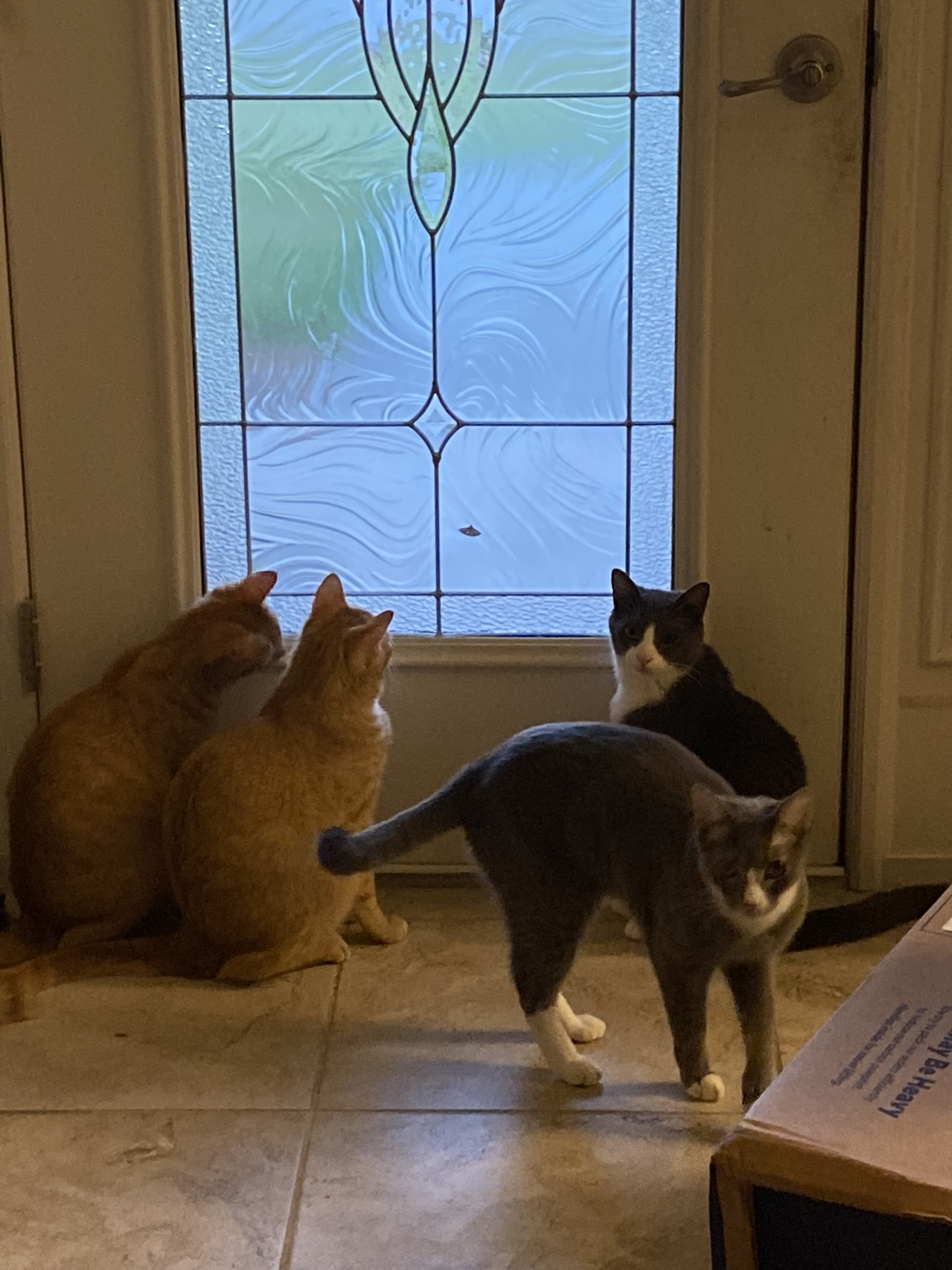
These are animals who sprint through the house at 3 a.m., climb things they shouldn’t, and occasionally make questionable decisions about their climbing skills. One of them has decided that door frames are an acceptable scratching surface. (Looking at you, Pie.)
Even with ten cats, declawing has never been something we’ve considered as a routine solution.
What Declawing Actually Is
Many people think of declawing as the feline equivalent of trimming nails.
It isn’t.
Declawing (onychectomy) is a surgical procedure that removes the claw and the last bone of each affected toe. Imagine chopping off your fingers at the first knuckle. Ow! The ASPCA opposes routine declawing and states that it should only be considered after alternatives have been exhausted or in situations where it is medically necessary for the cat.
In other words, this isn’t a manicure. It’s a significant surgical procedure.
Claws Are Part of the Deal
Let’s address the obvious elephant—or perhaps the obvious murder mitten—in the room.
This website is called Claws & Disorder, not Clawless & Disorder.
Cats come with claws. Those claws are important tools for climbing, stretching, balance, scratching, and defending themselves if they ever find themselves in trouble.
The reality is that murder mittens are part of cat ownership.
While our cats are indoor cats, accidents happen. Doors get left open. Screens fail. Cats make questionable life choices. If one of our cats ever found themselves outside, we’d want them to have every advantage possible.
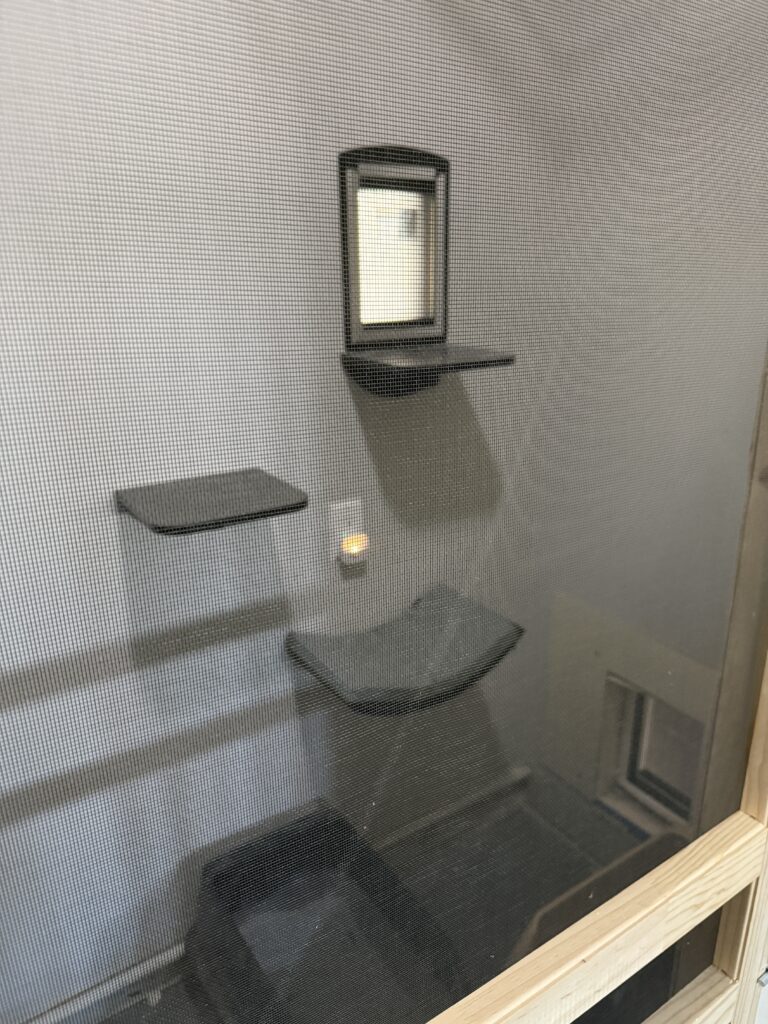
We also enjoy the fact that our screens occasionally resemble a feline version of American Ninja Warrior. It’s chaos, but at least they’re equipped for it.
Living With Claws Isn’t Nearly As Hard As People Think
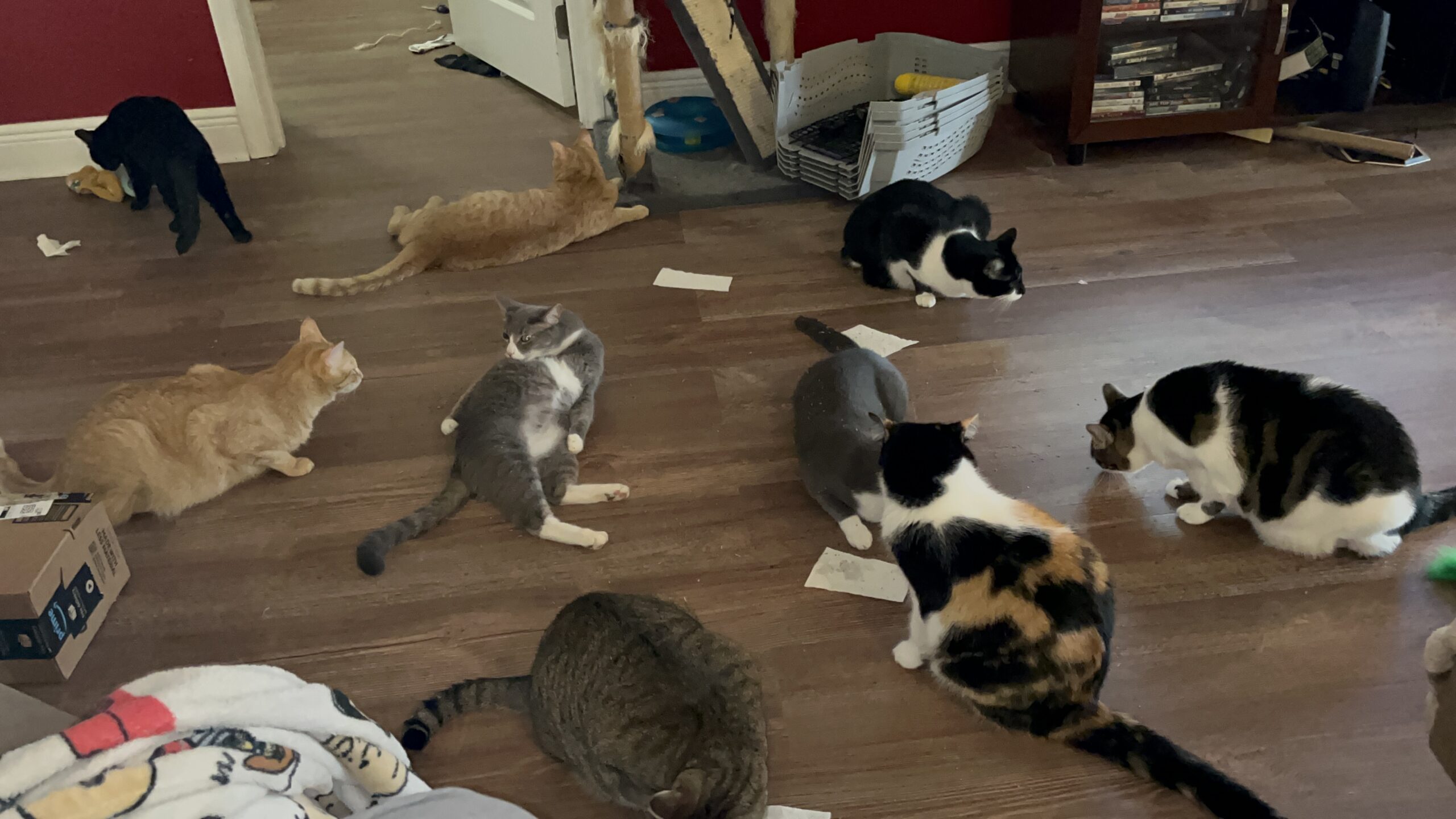
Here’s the thing: we have ten cats.
If anyone should be living in a shredded-furniture wasteland, it should probably be us.
Instead, we have very few scratching-related problems.
The key is giving cats appropriate places to scratch.
Provide Good Scratching Posts
A surprising number of scratching posts sold in stores are too short, too flimsy, or not the right materials.
Cats want to stretch their entire bodies when they scratch. If the post wobbles, tips over, or doesn’t allow a full stretch, many cats will simply ignore it.
Look for scratching posts that are:
- Tall enough for a full-body stretch
- Heavy and stable
- Located where your cats already spend time
- Available in different materials and textures
Some cats love sisal. Some prefer cardboard. Others appear committed to conducting extensive scientific research on every texture in the house before making a decision. Not all cats will use the same items. Sometimes, it’s the rug at the back door. Sometimes it’s a door frame (Pie!).
Offering variety helps.
We have scratching posts, cardboard scratchers, cat trees, and a variety of approved scratching surfaces throughout the house. Our cats like them at different heights and angles. Some are flat on the floor. Some stand up. Others are at an angle. Most of our cats use them exactly as intended.
Most.
Pie would like the record to reflect that door frames are also excellent scratching surfaces. We disagree.
Those Little Nail Sheaths Are a Good Sign
Ever find tiny, hollow claw coverings on the floor?
Those aren’t broken claws.
They’re the outer layers of the nail being shed naturally.
If you’re never finding them, your cat may not be getting enough effective scratching opportunities.
Scratching isn’t just about sharpening claws. It’s one of the ways cats maintain healthy nails.
Nail Trims Don’t Have To Be Dramatic
Despite what social media would have you believe, nail trimming doesn’t always require protective equipment, heavy sedation, and a hostage negotiator.
Many of our cats sleep right through it.
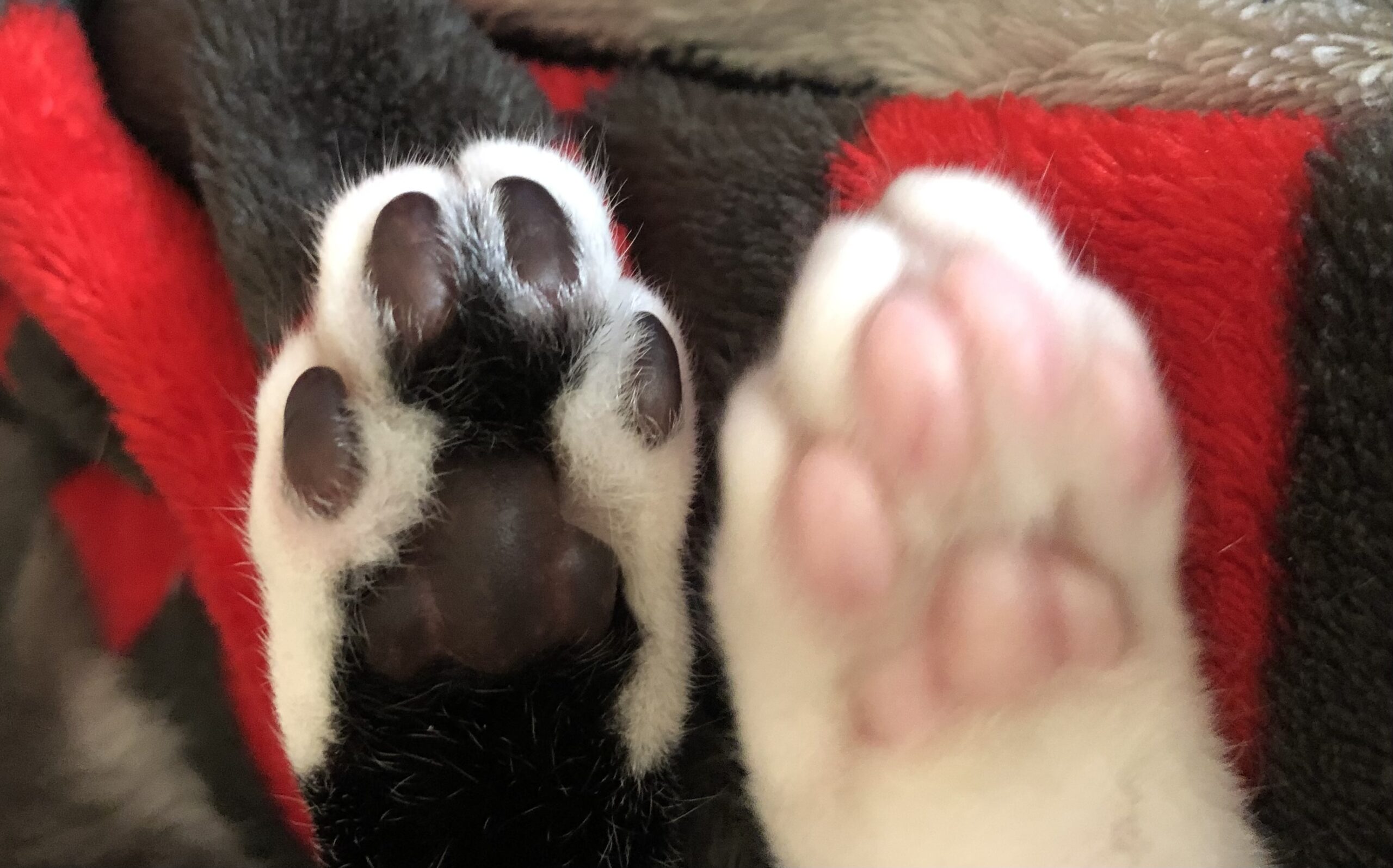
The secret is starting early and making paw handling normal. Spend time touching those little toe beans, gently pressing their toes, and helping them learn that having their feet handled isn’t a big deal.
One rule of thumb in our house:
If you can hear your cat’s nails clicking across the floor, it’s probably time for a trim.
We keep nail clippers in pretty much every room Mom spends time in. You never know when a cat is going to stretch out nearby, fall asleep, and accidentally volunteer for a manicure.
Most of the time we don’t trim every nail in one sitting. That’s okay.
A few nails today and a few more tomorrow is often easier than trying to wrestle a cat through a complete pawdicure.
We focus primarily on the front claws, which seem to need trimming more frequently than the back claws. Whether the back claws wear down more naturally or simply grow more slowly remains one of the great unsolved mysteries of cat ownership.
When trimming:
- Clip only the sharp tip
- Remove small amounts at a time
- Avoid the pink quick inside the nail
- Stop if either you or the cat becomes stressed
A successful nail trim doesn’t have to be perfect. It just has to happen regularly.
Are There Ever Valid Reasons To Declaw?
Yes.
There are legitimate medical situations where a veterinarian may recommend declawing for the cat’s health, safety, or treatment of a specific injury or condition.
Those decisions should be made with your veterinarian based on the individual cat and their medical needs.
What we oppose—and what many animal welfare organizations oppose—is routine declawing performed simply because a cat scratches.
Scratching is normal cat behavior. The solution is usually management, training, appropriate scratching surfaces, and routine nail care—not surgery.
The Claws & Disorder Verdict
We share our home with ten cats and over 150 claws.
The furniture is still standing.
The humans are mostly intact.
The cats get to stretch, climb, scratch, and engage in all of the normal cat behaviors that make them cats.
For us, that’s the goal.
Good scratching posts, regular nail trims, a little patience, and an acceptance that murder mittens are part of the package solve the overwhelming majority of claw-related problems.
Cats come with claws.
In our opinion, the better solution is teaching them where to use those claws—not taking them away.